
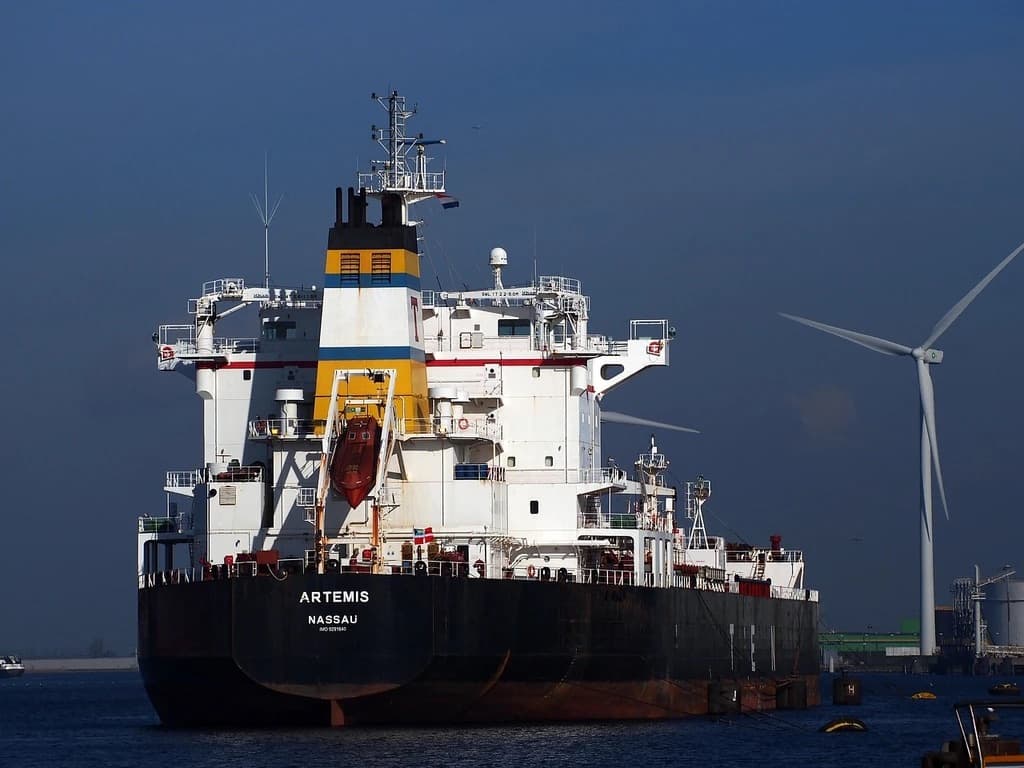
Sector · Industry & Energy
AI software for industry & energy
Bonsai builds AI software for industry and energy. In capital-intensive operations where downtime and compliance cost money directly, we open up the data your machines already produce, for maintenance, quality and reporting, around your existing SCADA, MES and ERP.
What's at play in industry & energy
In industry, unplanned downtime costs money directly; in the process industry it runs into hundreds of thousands a day. Maintenance at the wrong moment, quality control on samples and compliance reports stitched together by hand are recurring costs. At the same time you're sitting on a gold mine of data: machines and sensors throw off mountains of time series that land in the historian and then go untouched.
The knowledge to read a fault sits in the heads of experienced operators who are ageing. A new control system won't deliver the gain here; SCADA, PLCs and ERP are already in place. The gain comes from connecting and using the data between them, so you can predict instead of repair and flag instead of sample.
Energy sharpens the sums. High energy costs and grid congestion force smarter planning of energy-intensive process steps, and reporting obligations such as CSRD and CBAM call for traceable emissions data per period and per product. That data sits in your historian and ERP; the difference is who can get it out without tying up engineers to do it.
Systems we know and connect to
Where it pinches
Unplanned downtime
Faults seem to come 'out of nowhere', when the warning signs were already in the data nobody was using.
Quality on samples
Defects only surface after they're made, and only in the sample. Everything in between can still reach the customer.
Compliance reporting by hand
Engineers pull data from historian, ERP and Excel for environmental, emissions and CSRD reports: days of work with no operational payback.
Unused data and knowledge loss
The data sits in silos (SCADA, CMMS, ERP), and the know-how to read it sits in the heads of experts who are leaving.
Where AI does help, and where it doesn't
What we build for this
Predictive and condition-based maintenance
Vibration, temperature and current data turn into maintenance at the right moment, so you head off downtime before it happens.
AI quality control
Machine vision takes you from sampling to a hundred percent inspection, catching deviations earlier and more consistently, with no extra people on the line.
Automate compliance reporting
Emissions, environmental and CSRD reports are put together from historian and ERP, traceable and on time.
Data unlocking and operator assistant
The silos are joined up, and what departing operators know is captured and handed on to younger engineers.
Where AI is not the answer
- Your SCADA, PLC, DCS and ERP stay where they are; AI automates the work around them.
- A predictive model can only learn from what you've measured. Sometimes the first step is laying the data foundation, and we'd far rather flag that up front than discover it later.
- AI shouldn't reach autonomously into a plant's safety chain; that's the domain of certified control. AI flags, and the human decides.
What we deploy for this
Bonsai AI Digital Twin
A single data layer across SCADA, MES and ERP: separate silos become one system that mirrors your operation and flags issues.
View Bonsai AI Digital TwinBonsai AI Workers
Digital colleagues that put reports together from historian and ERP, prepare work orders and report deviations.
View Bonsai AI WorkersDottle
Document AI for incoming orders, certificates and supplier documentation, fed into your systems in structured form.
View DottleYou can read how we approach it, from discovery through to an SLA, in how we work.
Questions about AI in industry & energy
Do we have enough data for AI?+
Usually more than you'd think. A short analysis tells us which data is usable and where the fastest gain lies, before we build anything.
Where do you start?+
With one specific process that has clear value, maintenance or reporting for instance. From there we expand on the back of results.
What do CBAM and the CO2 levy mean for us?+
CBAM entered its definitive phase on 1 January 2026 and the national CO2 levy carries on; both call for traceable emissions data. Most of that reporting can be automated straight from your own systems.
Do we first need to build a data warehouse or data platform?+
No. We start with one specific process and pull exactly the data it needs from your historian, CMMS or ERP. A data platform can come out of that work later; it's never where we begin.
How do you handle our OT/IT separation?+
We stay on the IT side and read data through the historian or existing exports, never reaching into the control chain (PLC, DCS, SCADA). The safety and control layer stays certified territory.
Get started